Table of Contents
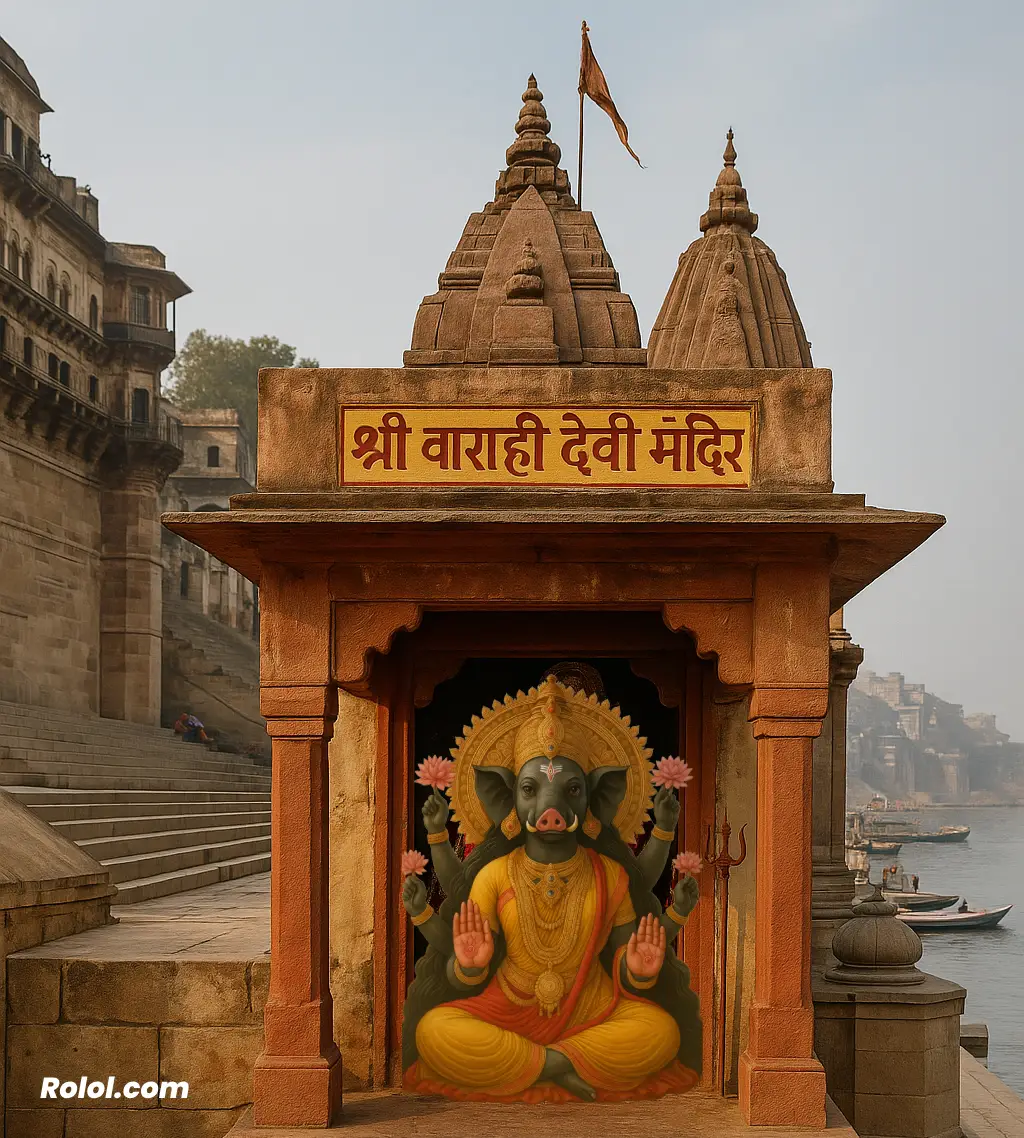
The Varahi Devi Temple is in Varanasi. It is dedicated to Varahi Devi. All the people trust that Sati’s body parts fell down in the Varanasi temple place, so Varahi Devi protected Varanasi. It is one of the Shakti Peetham in Varanasi. All the people believe that Varahi Devi protects the city from evil forces and negative energies. According to Kashi Khand, Varahi Devi was born from Sati Devi’s tooth, and Lord Skanda narrated this to Agastya Maharshi. Varahi Devi is revered as one of the Sapta Matrikas. Sapta Matrikas means seven mothers, and is one of the Deshamahavidyas. The meaning of dashamahavidyas is ten forms of knowledge. Some of the people believed her to be Lakshmi Devi, and some other people believed her to be the commander-in-chief of the goddess Durga’s arms.
Where Is the Varahi Devi Temple in Varanasi, and What Are Its Timings?
The VARAHI devi temple in Varanasi is located on Dashashwamedh Ghat. It is on the left side of the Man Mandir Ghat. We can go the way of the steps. And all the people believe the Varahi Devi daily leaves the temple at night and roams the city, and Varahi Devi protects the people, and she goes to the temple and takes rest in that temple in Varanasi. The Varahi Devi Pooja is also made in the early morning. The Varahi Devi Dharasan is only in the morning, and the temple timings are early, from 4AM to 8AM only. After 9, we can see the Varahi Devi in a small hole. In one hole, we can see the Varahi Devi’s face, and in another hole, we can see the Varahi Devi’s legs. Suppose we can see open the Varahi Devi doors after 9 in the morning; we can see the fierce form of Varahi Devi. So after 9, the Varahi Devi temple was closed, and Varahi Devi was taken to rest.
Fact About Varahi Devi
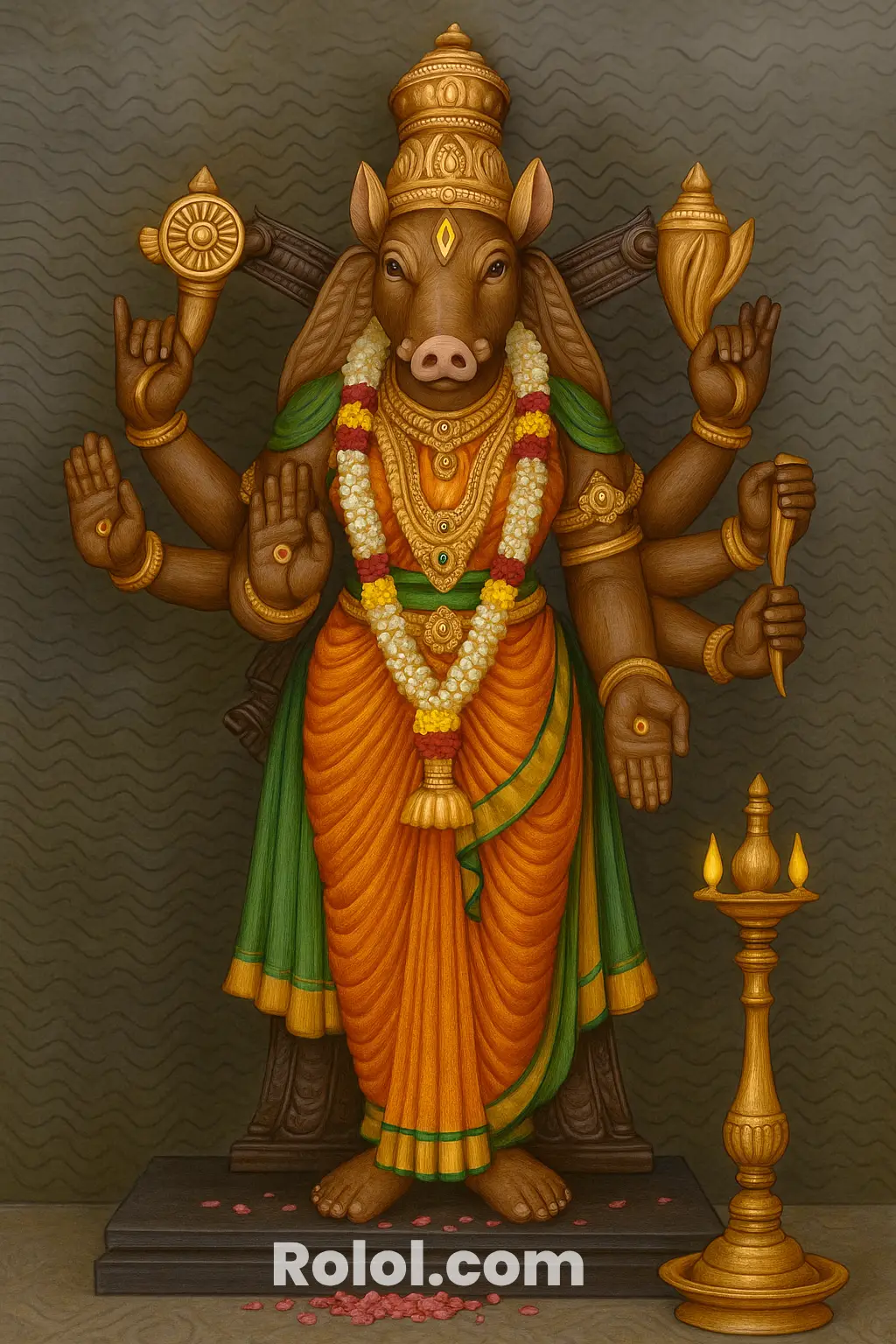
Sankaracharya once said that the primary spiritual energy in Sringeri Peetham is the Varahi energy of Varaha Swami. In recent times, millions of people have been worshipping the Varahi Devi. However, some people have started spreading a certain claim. They say that Shankaracharya referred to deities like the Varahi goddess and Vinayaka as spirits of ghosts. Referring to this, some are claiming that Mathur gana refers to the sapta matrikas and that Vinayaka refers to our Ganesha, creating fear among people. And the Ganpati or Varahi Devi we worship. According to the Purana, after Varaha Swami exerted himself in destroying demons, he rested on the peak of a nearby mountain. During this time, two rivers originated from the tusks of Varaha Swami; these are the rivers Tungabhadra (Tunga and Bhadra). There is a mountain near this area called Varaha Parvata. From there, these two rivers emerged. The Tunga and Bhadra flow separately for about 100-120 kilometers and then converge to form the Tungabhadra. As the two rivers Tunga and Bhadra originated from the tusks of Varaha Swami, they are considered sacred and special rivers. Since these rivers, born from Varaha Swami’s tusks, flow nearby and are considered sacred waters of this kshetra, the term “varaha” here refers to Varaha Swami, and his relationship to Sringeri is rooted in this story. The Tunga and Bhadra rivers, which are teerthas in this region, signify this connection. The purana also mentions another important detail. The rivers Tunga and Bhadra, although they appear to flow separately for some distance after originating from Varaha Swami’s tusks, are not truly separate. They are described in the Puranas as being like Hari and Hara (Vishnu and Shiva). Similarly, the Tunga and Bhadra may seem like two distinct rivers but are fundamentally one. Many people question this, asking how it can be “tungabhadra teeravasi.” When the river here is just the Tunga River, the name Tungabhadra should be used only after the merging of the Tunga and Bhadra rivers. However, the Puranas clarify this point. The Puranas state that viewing Tunga and Bhadra as separate is a misconception.
Even though we may see Tunga as just Tunga and Bhadra as just Bhadra, they are essentially one and the same, forming the Tungabhadra. It is similar to just how the Krishna and Godavari rivers are being called with the same names even though they have multiple channels. Therefore, the title Tungabhadra teeravasi has been passed down through tradition from ancient times. The Tunga River alone is still considered to be the Tungabhadra, which is why the title Tungabhadra Teeravasi is used. When worshipping the Tunga River, it is done with the understanding that it is in the form of Harihara. Every year, during the Navratri festival, especially during the dakshinatana auspicious period, prayers are offered to the Tunga River with this understanding. Coming to the term Vinayaka, it is indeed used in the commentary by Shankaracharya. The term Vinayaka here does not mean Lord Ganpati. It refers to the ganas.
For more interesting facts visit again: Rolol.com
Follow on Instagram: @GunturuGopal